In 1854 the Victorian Govt funded a Morse Code telegraph line via a bank of batteries (12v to 24v) from Melbourne city to Williamstown (17kms). In 1856 a line ran from Port Adelaide to Adelaide city. In 1858 links between Melbourne to Adelaide and Melbourne to Sydney were activated. In 1861 Queensland’s telegraph line introduced and connected to Sydney. In 1861 there were 110 telegraph stations spread across the eastern colonies, using "inkers" and "sounders" and Wheatstone ABC "dials" for those unfamiliar with Morse code. Messages crossing colonial borders transcribed onto paper by an operator, transported across the border and then retransmitted.
In 1870 the UK nationalized its Telegraph system under the GPO (General Post Office). In November 1871 the first overseas telegraph from London to Adelaide built by the British Australian Telegraph Company, founded by John Pender. It ran a submarine low-frequency line Singapore - Java - Darwin (20-30v) then overland to Adelaide (120v). Banks began to employ password codes for Telegraphic Transfers (TT) pioneered in 1871 by Western Union in the US.
The Argus newspaper in Melbourne formed an association with The
In 1877, Alfred Barratt Biggs (1825-1900), telephoner and astronomer, is credited with making the first long distance telephone call in Australia between Campbell Town and Launceston Tasmania, an 80 kilometre distance.
In Brisbane in January 1878, Dr Severn successfully experimented with telephones over a mile of telegraph wire at the Electric Telegraph Office at the Brisbane GPO.

|
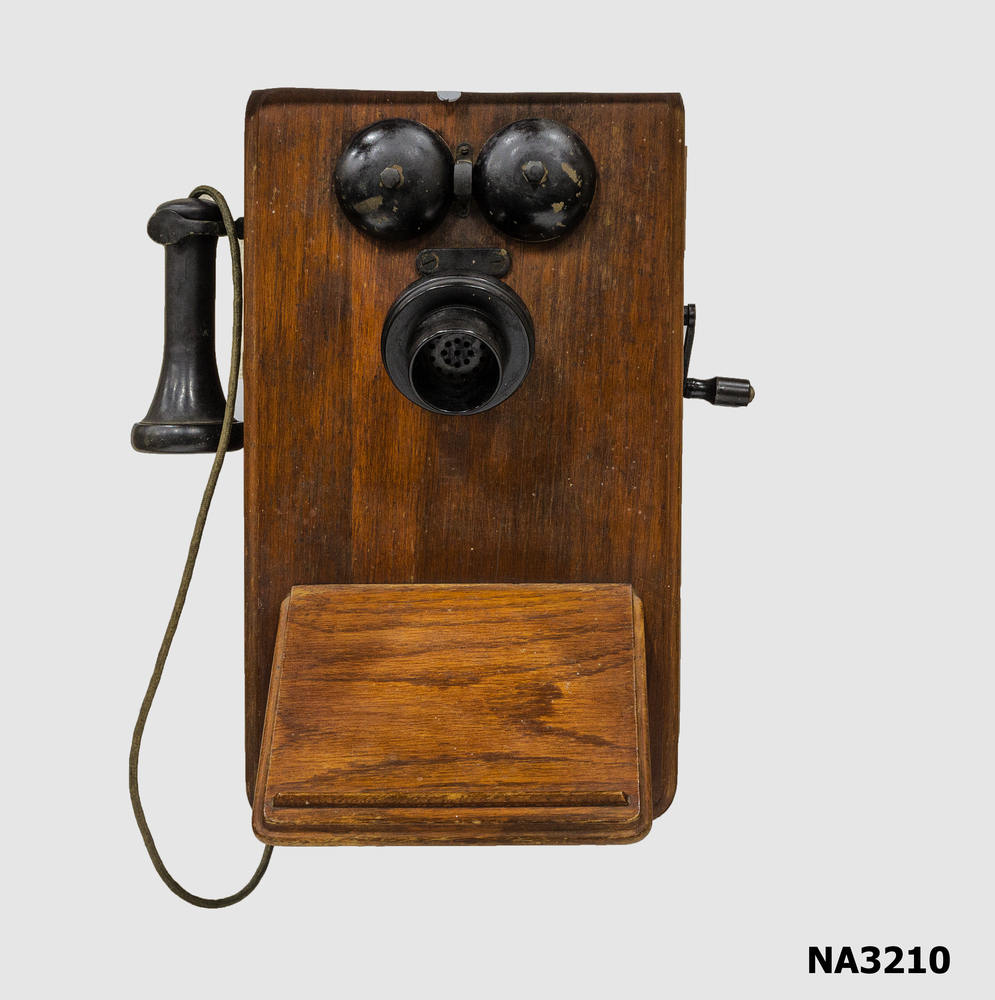
In 1880, exchanges from US Western Electric using single lines with ground return, fairly noisy (click here for why) cf twisted cable / coax.
Back to 1880. First installation was a private exchange in Collins Street Melbourne in August then Queen Street GPO in Brisbane in October. Phones cost £10, lines £5 per mile annually, maintenance £1. Each phone had 2 x 1.5v batteries, and via a magneto handle on the phone a 75v - 100v AC signal dropped a shutter at the exchange, revealed a number, and rang a small bell. It then connected via patch cords with plugs and spring jacks. Called the Edison-Bell loud speaking telephone.
In Pitt Street Sydney, a "trial line" was set up between the Stock Exchange and GPO, with a switchboard (next paragraph) in 1881-82. Next, Hobart Launceston and Adelaide 1883, a toll line and exchange in Albion in Brisbane 1883-1884, then as Melbourne exchange (in Wills Street after 1884) reached 880 subscribers in 1887, it was purchased by Victorian Govt. Underground twisted cable (local loop) followed in 1888.
More on Sydney
October 1881 Sydney's first exchange opened between the Stock Exchange and the Government's Railway Wool Sheds at Darling Harbour, 12 to 15 lines. Following an accidental electrical fire in December 1882 at a banquet at the exchange to celebrate their new electric lighting, the recently opened GPO took over all management.
These early exchanges employed message boys to operate the equipment, however the boys quickly earned a reputation as inefficient, unruly and impertinent. In an effort to improve customer service they were replaced by women specifically employed for the job.
Brisbane Costs: In 1885 Brisbane subscriber numbers reached 300. A public phone in Fortitude Valley opened in 1888, 6d for 5 minutes.
In 1889 users now rented phones at £6 annually. When positions were advertised for 13 switch-board assistants at a salary of 10 shillings per week, 1671 young women applied. The new multiple switchboard cut over in 1890,
click here for photos. In 1895 subscribers reach 600 and a call for a specialist electrical engineer from abroad. Toowong exchange opened 1897, Ipswich opened underground lines 1899, Sandgate 1907.
In 1900, 30,000 telephone services (mostly businesses) operating in Australia.

That same year, another exchange opened at Lonsdale Street in Melbourne for 9,000 subscribers, having 30 internal circuits for each line, in total 276,000 telephone jacks, the largest in Australia. Click here for the newspaper announcement. Wills Street Exchange lines were transferred incrementally.
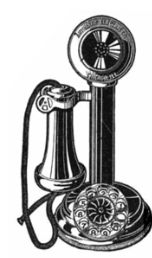 In 1912, the first automatic public telephone exchange opened in Geelong. In 1914 Newtown, Balmain, Glebe followed, in 1925 South Brisbane, click here for announcement in the Brisbane Courier. These automatic exchanges were based on a design patented by the Strowger Automatic Telephone Exchange Company in 1891. Used at independent exchanges in US, tested at Sydney GPO 1911, adopted London 1912, and finally AT&T Bell in US in 1919. Sydney city converted in 1927, Brisbane city in 1929. Not till after WW2 did Melbourne Central convert at Russell Street automatic exchange in 1954, becoming relay station for TV broadcasts. A new Lonsdale Street exchange opened in 1969.
That same year, Radio Stations having "A" class (government-owned) and "B" class (business-owned) licenses get under way in Sydney and Melbourne. Followed in 1925 by radio stations in Brisbane and Darling Downs.
 |
** Called "bits" (binary digits) after 1948
Eight thousand Brisbane telephone numbers would be altered under a new re-routing plan to operate from April 1 next, the Postmaster-General's Department announced yesterday. Numbers affected are in the City. Valley. Camp Hill. Coorparoo. Mitchelton. Lutwyche. and Newmarket areas. New telephone number prefixes will be—L for certain Valley and City numbers. XW in Camp Hill. XU in Coorparoo, LL in Mitchelton. LU in Lutwyche. and LM in numbers in the 7000 and 8000 groups in Newmarket.
Click here for a 1927 Sydney Directory with Exchanges on Image 14.

In 1960 telephone numbers became 6 numeric digits, 7 from 1971, 8 by 1998.
In 1959 Morse Code Telegraphs are auto switched to Telex by the exchange whenever possible. It then winds down, last telegram in Sydney December 13 1962, letter-gram 1993.
"Words" and "Bits" connected via pins to a CPU by a matrix of wordlines and bitlines are new terms, with36-bit word architectures dominant in scientific, military, and large-scale accounting apps.
 AARNet. On June 23 1989 at 56kbps, a 24/7 TCP/IP (Internet) connection was opened by Dr Troben Nielsen at the University of Hawaii and Robert Elz at the University of Melbourne (AARNET) with subject line “Link Up”
- In June 1995 commercial assets sold to Telstra, who form Bigpond.
Overseas Fibre Optic
- 1995 PacRimWest provided twin-pair 560Mbit/s optical fibre cable. Capacity for 80,000 phone calls, and Internet.
- 2000 Southern Cross Cable built by Singtel-Optus and others connecting Sydney Fiji New Zealand and Hawaii to Oregon and California. In 2022 its NEXT Submarine Cable was upgraded to 72 terabits (thousands of full HD movies) per second.
- 2000 SEA-ME-WE 3 (South-East Asia - Middle East - Western Europe 3) built by France Telecom and China Telecom, also administered by Singtel, connecting Perth to Western Europe.
- 2001 Australia-Japan Cable built by Telstra and others. In 2014 AJC announced the completion of a multi-terabit upgrade to the network. Click here for a recent Telstra article in 2023.
In 1999 Connect.com.au was purchased in full by AAPT Australian Associated Press Telecommunications – owned by News Limited and John Fairfax, who sold it in 2000 to Telecom New Zealand.